It’s more than making art.
Art can be therapeutic. But art that feels therapeutic and art therapy aren't quite the same thing.
Here is the difference…
Art has an incredible ability to help us slow down, express what can be difficult to put into words, connect with others, and make meaning from our experiences.
Art therapy brings together the creative process with specialized training in mental health and human development. And you don't need to consider yourself an artist to experience it.
The art isn't the goal. What happens through the process is where things get interesting.
But I'm not artistic...
Good news. You don't need to be.
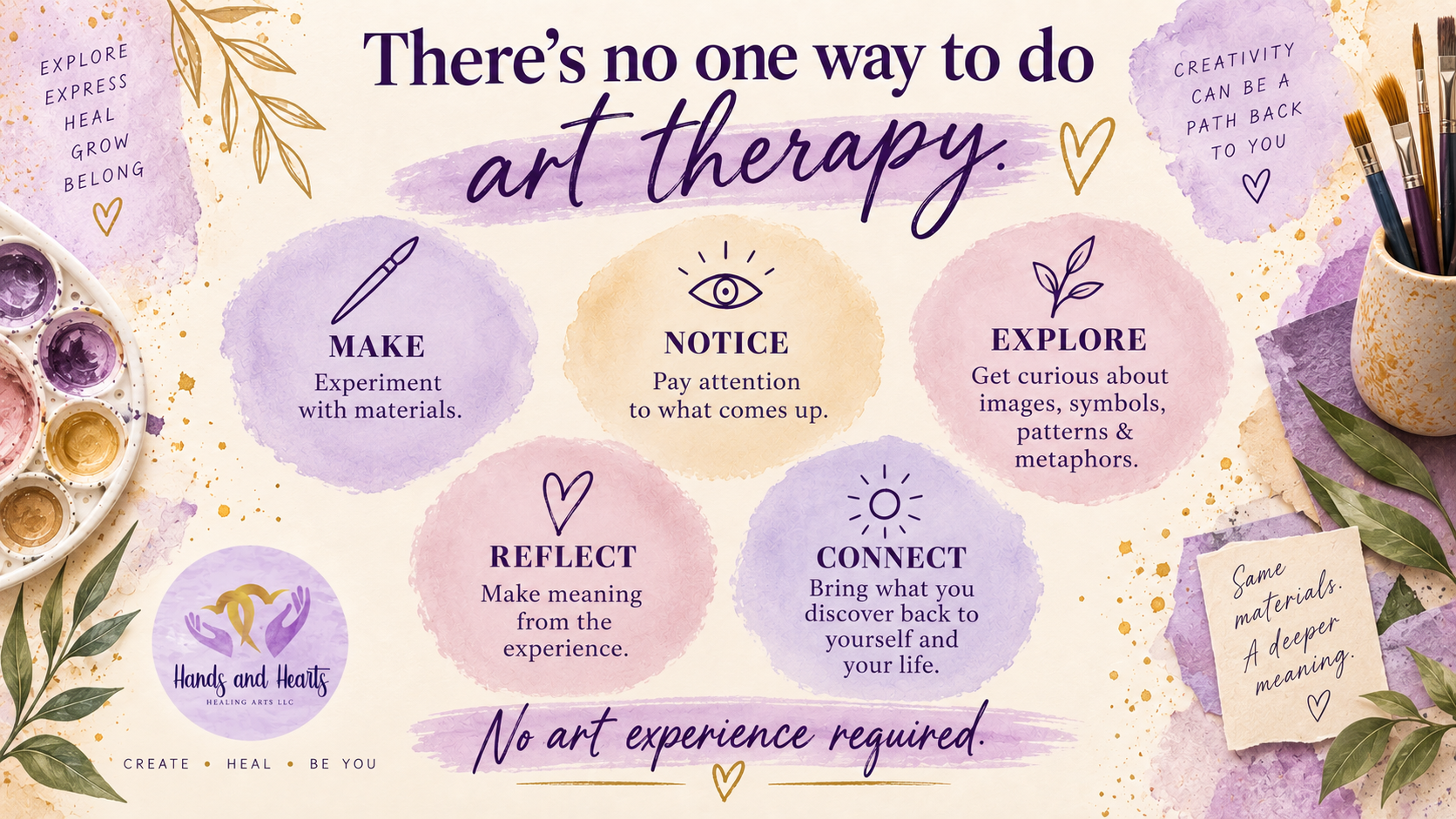
Art therapy isn't about making something beautiful, impressive, or worthy of hanging on a wall. Your art can be messy, abstract, unfinished, simple, or something only you understand.
There is no "good at art" requirement here.
You bring yourself.
The materials give us another language to work with.
So what makes it art therapy?
Art doesn't belong to art therapists.
Counselors, social workers, occupational therapists, educators, and other helping professionals may use art to support relaxation, mindfulness, expression, connection, communication, or skill-building. Art can be a wonderful intervention.
What makes art therapy different isn't simply having art supplies in the room. It's the specialized clinical training and perspective an art therapist brings to the creative process.
We're paying attention not only to what someone creates, but to the process: how they approach the materials, patterns and changes that emerge over time, developmental considerations, emotional responses, and what may need further exploration.
Even the materials can be intentional. Different materials offer different experiences of structure, sensory engagement, control, and freedom. An art therapist considers the person in front of them when deciding what to introduce, when, and why.
The art is the intervention. The clinical knowledge is guiding how, when, and why we use it is what puts the therapy in art therapy.
Artwork isn't interpreted in isolation or used as a diagnostic test. It's understood within the larger context of the person and their experience.
Why make art when we already have words?
Sometimes we know something without quite knowing how to say it.
Images, colors, symbols, movement, texture, and metaphor can give us another way to explore experiences that feel complicated, unclear, or difficult to put into words.
Creating something outside of ourselves can also give us a little distance from it, allowing us to look at an experience differently, notice something we hadn't before, or find a starting point for a conversation.
Sometimes making meaning starts before we have the words for it.
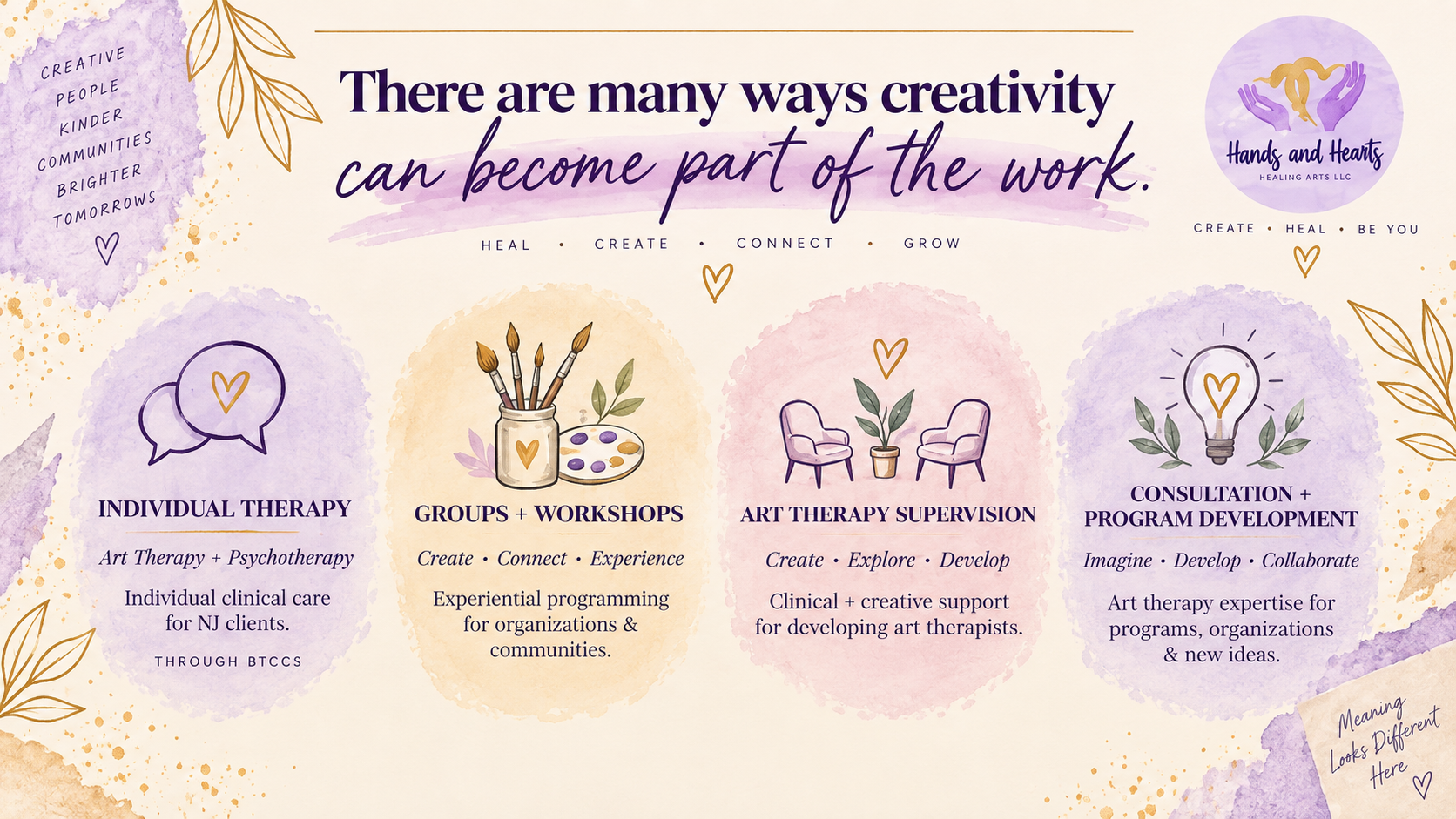
Ways to work with me through art therapy.
CURRENTLY ENROLLING
The Art of Holding Space
Virtual Expressive Arts Psychotherapy Group for Therapists & Helping Professionals
A 6-week creative space for helping professionals to step out of the helper role, reconnect with themselves, and explore sustainable wellness through expressive arts and supportive connection.